A severe Florida storm rolls through your neighborhood, and when it is over, you discover that a tree from your neighbor’s property has fallen onto your home. Your roof is damaged, a fence is destroyed, or branches have crashed through part of your property.
The tree belonged to your neighbor, so their insurance automatically pays for the damage, right?
Not necessarily.
When a neighbor’s tree damages your Florida property, determining who may be responsible can depend on why the tree fell, what was known about its condition before the incident, and which insurance coverage applies.
Understanding these factors can help you determine what to do next and how to protect your property damage claim.
Who Pays When a Neighbor’s Tree Falls on Your House?
There is no single answer that applies to every fallen-tree situation.
In many cases, your own homeowners insurance may be involved when a tree falls onto your insured property because of wind, a hurricane, or another covered event. However, the circumstances can become more complicated if the tree was already dead, diseased, unstable, or otherwise dangerous before it fell.
The key questions may include:
- Why did the tree fall?
- Was the tree visibly damaged or unhealthy?
- Did the property owner know about the problem?
- Had anyone previously complained about the tree?
- Was the incident caused primarily by severe weather?
- What structures or property were damaged?
- Which insurance policies apply?
These details can affect how the resulting property damage claim is handled.
What If a Storm Knocked Down a Healthy Tree?
Florida homeowners regularly deal with tropical storms, hurricanes, thunderstorms, and high winds.
Even a healthy tree can fall during severe weather.
If a healthy tree from your neighbor’s yard is knocked over by strong winds and damages your home, the fact that the tree originated on your neighbor’s property does not automatically make your neighbor responsible for the damage.
Your own property insurance may potentially apply, depending on your policy and the cause of loss.
Coverage varies, so review the specific terms, deductibles, exclusions, and limitations of your policy rather than assuming who must pay.
What If the Neighbor’s Tree Was Already Dead or Dangerous?
The situation may be different if there were clear problems with the tree before it fell.
For example, the tree may have been:
- Dead
- Diseased
- Severely rotted
- Visibly leaning
- Structurally unstable
- Missing large sections
- Previously damaged
- Identified as hazardous
If a property owner knew, or potentially should have known, that a tree presented a dangerous condition and failed to address it, questions about negligence and responsibility may arise.
Determining legal negligence is not the role of a public adjuster. When liability is disputed, a qualified attorney may need to evaluate the circumstances.
However, evidence concerning the tree’s condition can still be important when dealing with the resulting insurance claim.
What Should You Do Immediately After a Neighbor’s Tree Damages Your Property?
Safety should come first.
Do not approach fallen trees or branches that are touching electrical lines. Stay away from areas that appear structurally unstable and contact the appropriate emergency services or utility provider when necessary.
Once it is safe, begin documenting the loss.
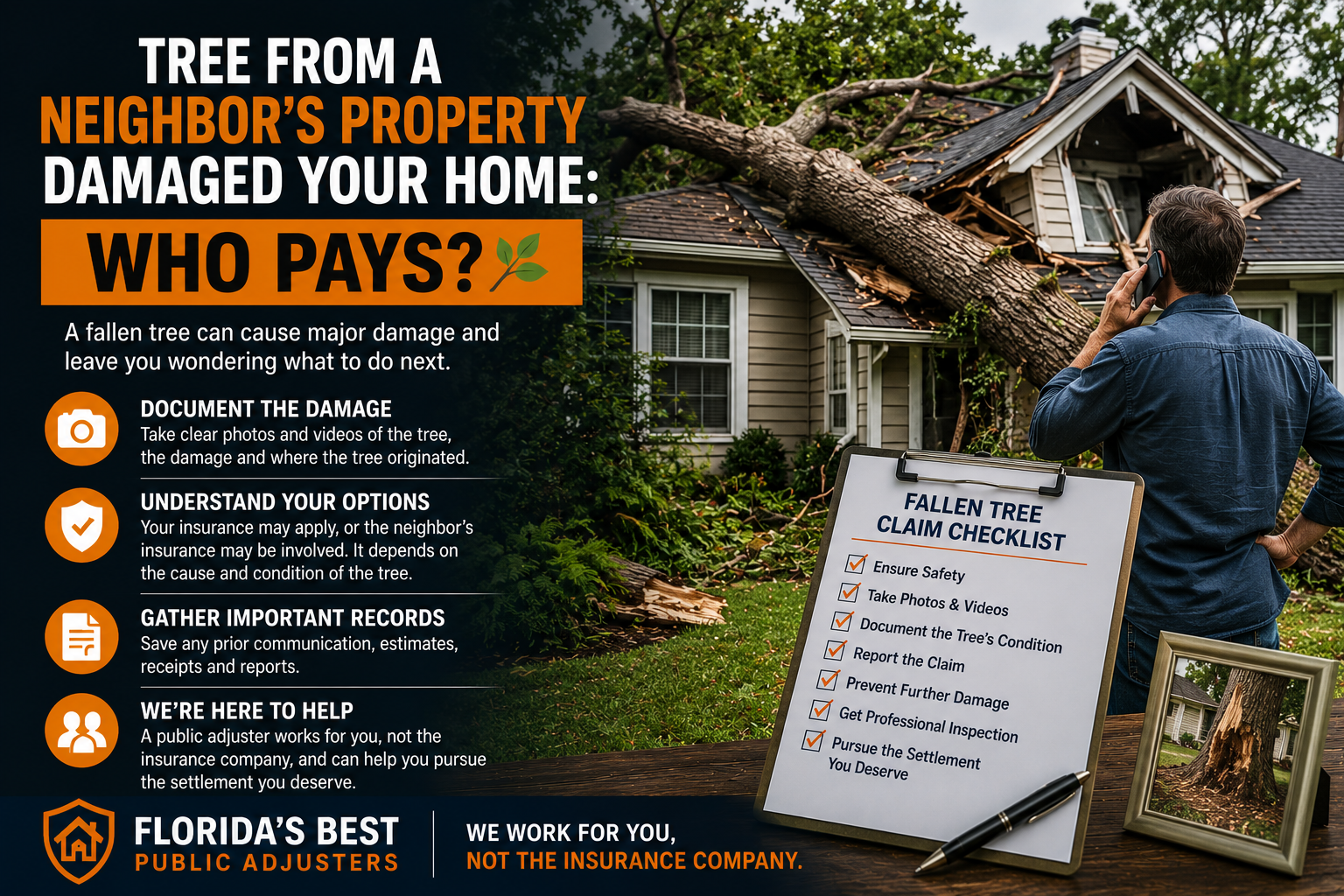
Take photographs and videos showing:
- The entire fallen tree
- Where the tree originated
- The damaged portion of your home
- Roof damage
- Broken windows or doors
- Damaged fencing
- Interior water intrusion
- Damaged personal property
- Surrounding debris
- Any visible deterioration of the tree
Take both wide photographs and detailed close-ups.
This documentation may become valuable if questions later arise about how the loss occurred or the condition of the tree.
Document the Tree Before It Is Removed
A fallen tree may need to be removed quickly to prevent additional damage or make the property safe.
However, document it thoroughly before removal whenever it is safe and practical to do so.
Photograph the trunk, roots, branches, visible decay, and the location where the tree stood.
If you previously communicated with your neighbor, property manager, homeowners association, or another party about concerns regarding the tree, preserve those communications.
Emails, photographs, text messages, letters, inspection reports, and prior tree-service recommendations could potentially become relevant.
What Types of Property Damage Can a Fallen Tree Cause?
Tree damage can extend beyond a few broken roof shingles.
A large tree or heavy branch can cause significant damage to:
- Roofing systems
- Roof decking
- Gutters
- Windows
- Exterior walls
- Fences
- Garages
- Sheds
- Screen enclosures
- Interior ceilings
- Attic spaces
- Electrical systems
- Personal property
Rain entering through a damaged roof can also create additional water damage inside the home.
For that reason, the visible impact point should not necessarily be the only area inspected.
What If Water Enters Your Home After the Tree Falls?
A tree may puncture or compromise the roof, allowing rainwater to enter the property.
That can turn a tree-damage incident into a much larger property loss.
Water may affect insulation, drywall, ceilings, flooring, cabinetry, electrical components, and personal belongings.
Take reasonable emergency measures to prevent additional damage, such as arranging for temporary roof protection when appropriate.
Keep invoices and receipts for emergency services and document the property before and after temporary repairs.
Is This a Third-Party Property Damage Claim?
Potentially.
If another property owner’s actions or failure to address a known hazard contributed to the loss, questions regarding third-party responsibility may arise.
However, simply establishing that the tree came from your neighbor’s yard does not automatically establish liability.
Depending on the circumstances, your own insurance, another party’s insurance, or multiple policies may become relevant.
This is why understanding both the cause of the loss and the available insurance coverage is important before determining how to proceed.
What If Your Neighbor Says It Isn’t Their Responsibility?
Disagreements between neighbors are common after tree damage.
Rather than relying on verbal conversations alone, focus on preserving evidence and documenting the property loss.
Keep records of:
- Conversations with your neighbor
- Insurance correspondence
- Photographs and videos
- Tree removal invoices
- Emergency repair expenses
- Contractor estimates
- Inspection reports
- Prior complaints concerning the tree
If the dispute becomes a legal question about negligence or liability, consider speaking with an attorney.
Can a Public Adjuster Help With a Fallen Tree Claim?
Depending on the circumstances and applicable insurance coverage, a licensed public adjuster may be able to assist with the property damage insurance claim.
Florida’s Best Public Adjusters can help qualifying claimants with:
- Inspecting property damage
- Documenting affected areas
- Identifying potentially overlooked damage
- Preparing a detailed scope of loss
- Organizing supporting documentation
- Reviewing insurance claim information
- Communicating with insurance representatives
- Negotiating covered property damage when appropriate
A public adjuster represents the claimant’s interests during the insurance claim process, not the insurance company’s.
Don’t Assume the Initial Estimate Covers Everything
When a tree strikes a home, some damage may be obvious while other problems remain hidden.
An initial inspection may identify damaged shingles, for example, while overlooking roof decking, attic components, moisture intrusion, or interior damage.
Before resolving your claim, make sure the property has been thoroughly evaluated and that the repair estimate reflects the complete scope of covered damage.
Get Help After a Tree Damages Your Florida Property
When a tree from a neighboring property damages your home, determining who pays may be more complicated than simply identifying who owned the tree.
The cause of the loss, condition of the tree, applicable insurance policies, and extent of the property damage can all matter.
Florida’s Best Public Adjusters helps Florida property owners and qualifying claimants document covered losses and navigate complicated property insurance claims.
If a neighbor’s tree has damaged your home or other property, contact Florida’s Best Public Adjusters to discuss your claim and learn how our team may be able to help.
Frequently Asked Questions
Is my neighbor automatically responsible if their tree falls on my house?
No. The fact that a tree originated on your neighbor’s property does not automatically establish responsibility. How and why the tree fell, its prior condition, and the applicable insurance coverage can all matter.
What if the tree was dead before it fell?
A dead, diseased, or visibly hazardous tree can raise additional questions about whether the property owner knew or should have known about the danger. Legal questions concerning negligence should be evaluated by an attorney when necessary.
Should I remove the tree immediately?
Address immediate safety concerns and take reasonable steps to prevent additional damage. When safe and practical, thoroughly photograph and video the tree and resulting property damage before removal.
Can a public adjuster help with tree damage?
Depending on the insurance coverage and circumstances, a public adjuster may assist with inspecting and documenting covered property damage, preparing the claim, and negotiating with the appropriate insurance company.