When someone else damages your home, condo, or commercial property, figuring out who is responsible for paying can quickly become complicated. You may know who caused the damage, but that does not necessarily mean getting your property repaired will be simple.
In many situations, the responsible party’s insurance company may be involved. This is commonly known as a third-party property damage claim. Understanding how these claims work can help Florida property owners protect their interests and pursue the compensation needed to repair their property.
What Is a Third-Party Property Damage Claim?
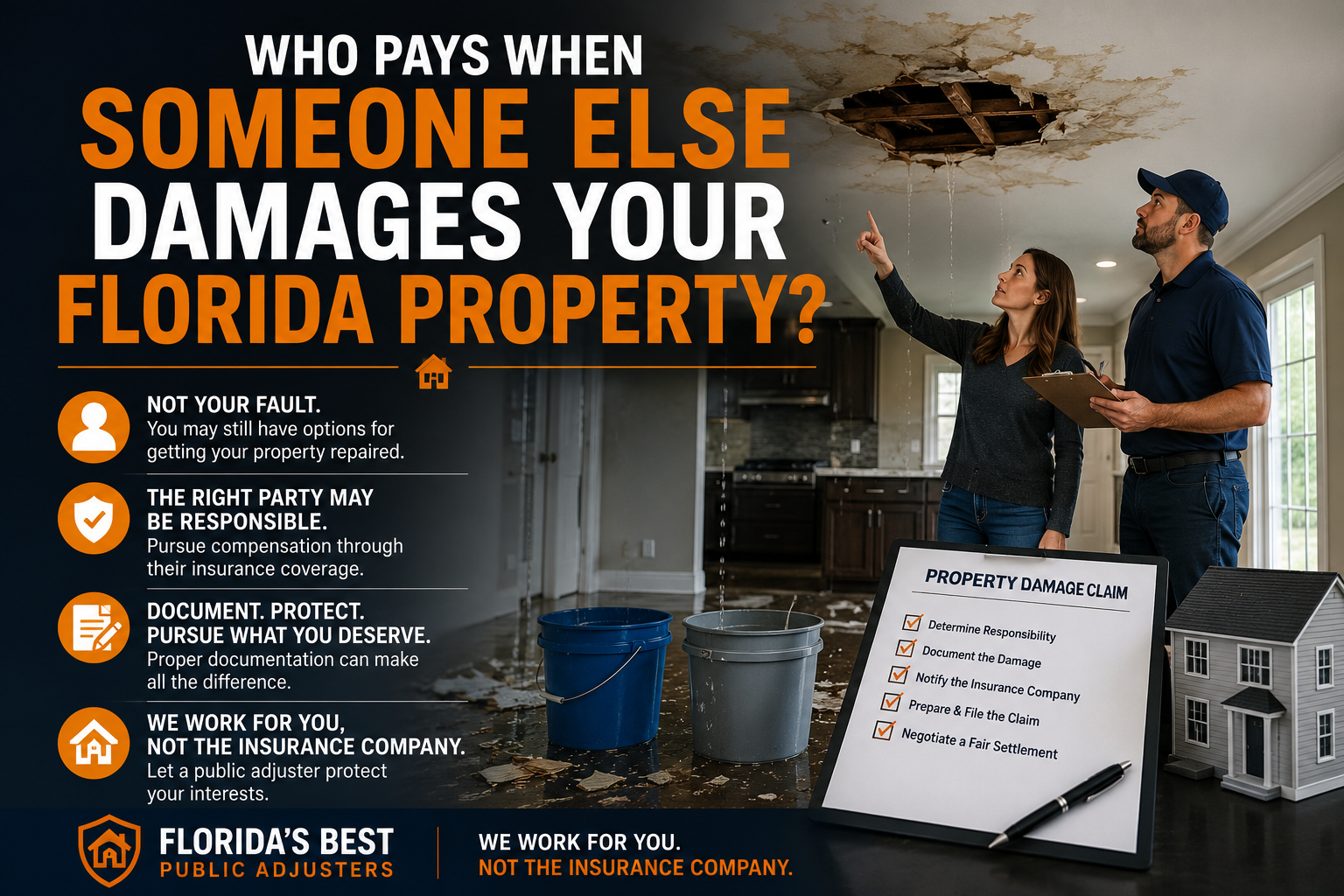
A third-party property damage claim occurs when someone else’s actions cause damage to property you own.
Instead of making a claim solely against your own property insurance policy, you may be seeking compensation through the insurance coverage of the person or business responsible for the damage.
For example, imagine that a plumbing contractor working in the condo above yours accidentally causes a major water leak. Water travels through the floor and damages your ceiling, walls, flooring, cabinets, and personal belongings.
You did not cause the loss. Depending on the circumstances and applicable insurance coverage, the contractor, another property owner, an association, or an insurer may be involved in addressing the resulting damage.
Common Examples of Third-Party Property Damage in Florida
Third-party property damage can happen in many ways. Common situations include:
- Water leaking from a neighboring condo or apartment
- Contractor mistakes that damage your property
- Plumbing work that causes water damage
- Construction activity that damages a neighboring building
- A neighboring property owner’s actions causing damage
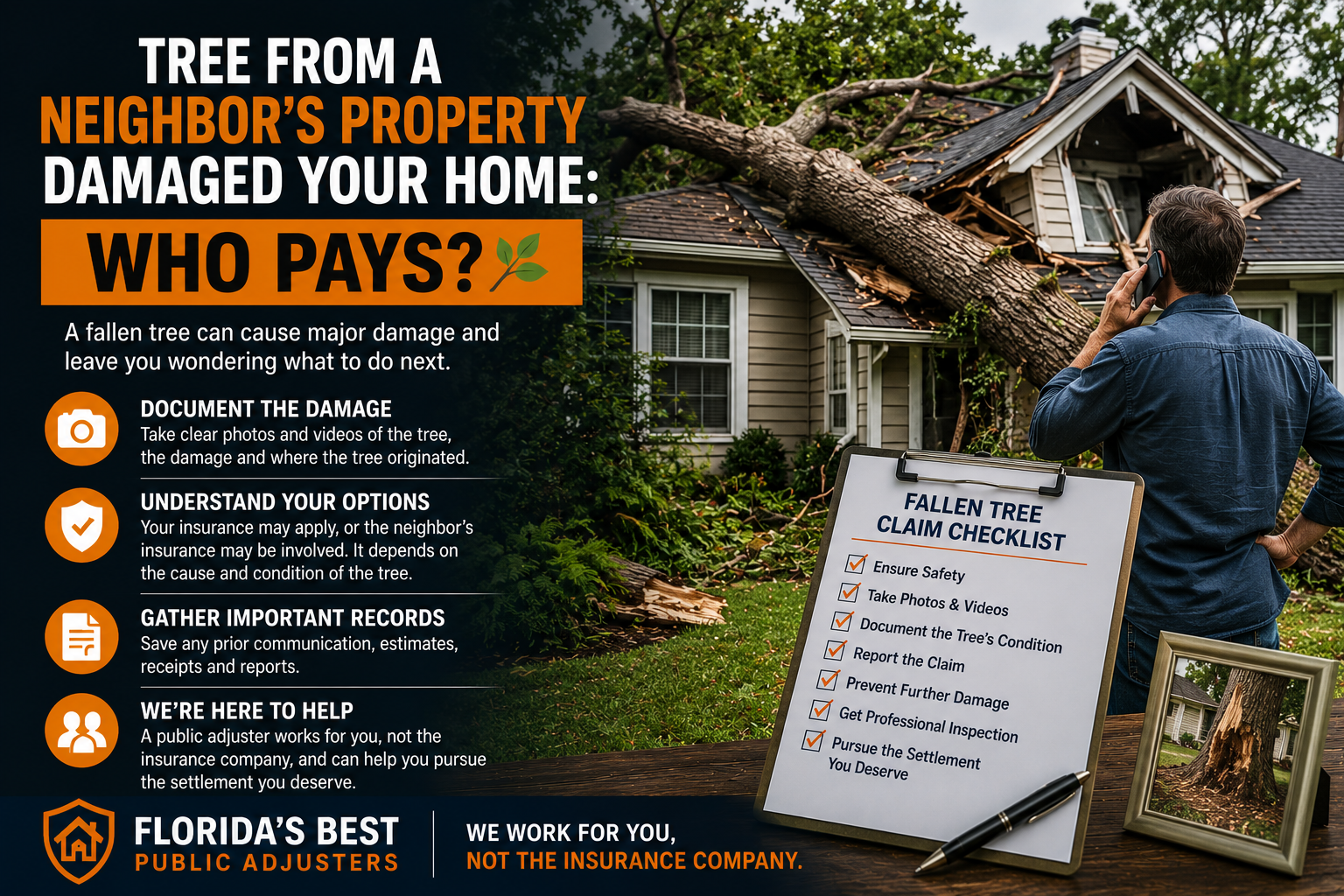
- Trees or other property damaging a neighboring structure
- Commercial tenants causing damage to a building
- Accidental damage caused by a business or service provider
Determining who caused the damage is only the beginning. The next question is whether that person or business has insurance coverage that applies to the loss.
Who Is Responsible for Paying for the Damage?
There is no single answer that applies to every third-party property damage claim.
Responsibility depends on factors such as how the loss happened, who caused it, the insurance policies involved, and the circumstances surrounding the incident.
Potential sources of recovery may include:
- The responsible party’s liability insurance
- A contractor’s commercial liability policy
- A neighboring property owner’s insurance
- A condominium association’s applicable insurance coverage
- Your own property insurance policy, depending on the circumstances
In some cases, multiple insurance policies may become involved.
That is one reason these claims can become much more complicated than they initially appear.
What If the Other Person’s Insurance Company Contacts You?
If another party’s insurer is handling the claim, remember that its adjuster represents the insurance company.
You may be asked to provide information about the incident, photographs, repair estimates, documentation, or other evidence of your loss.
Before agreeing to a settlement, make sure the full extent of your property damage has been identified and documented.
What initially appears to be a small water leak, for example, could also involve damage behind walls, underneath flooring, inside cabinets, or in other areas that are difficult to see.
Why Documentation Matters
Strong documentation can be especially important in a third-party insurance claim because you may need to demonstrate both what happened and the extent of your damages.
After discovering damage, consider taking the following steps:
- Photograph and video all affected areas.
- Document where the damage appears to have originated.
- Keep damaged materials when practical.
- Save receipts for emergency repairs.
- Obtain reports from contractors or other professionals.
- Keep copies of emails and correspondence.
- Record the names of companies and individuals involved.
- Maintain copies of repair estimates and invoices.
Avoid making unnecessary permanent repairs before the damage has been thoroughly documented. However, take reasonable emergency measures when necessary to prevent additional damage.
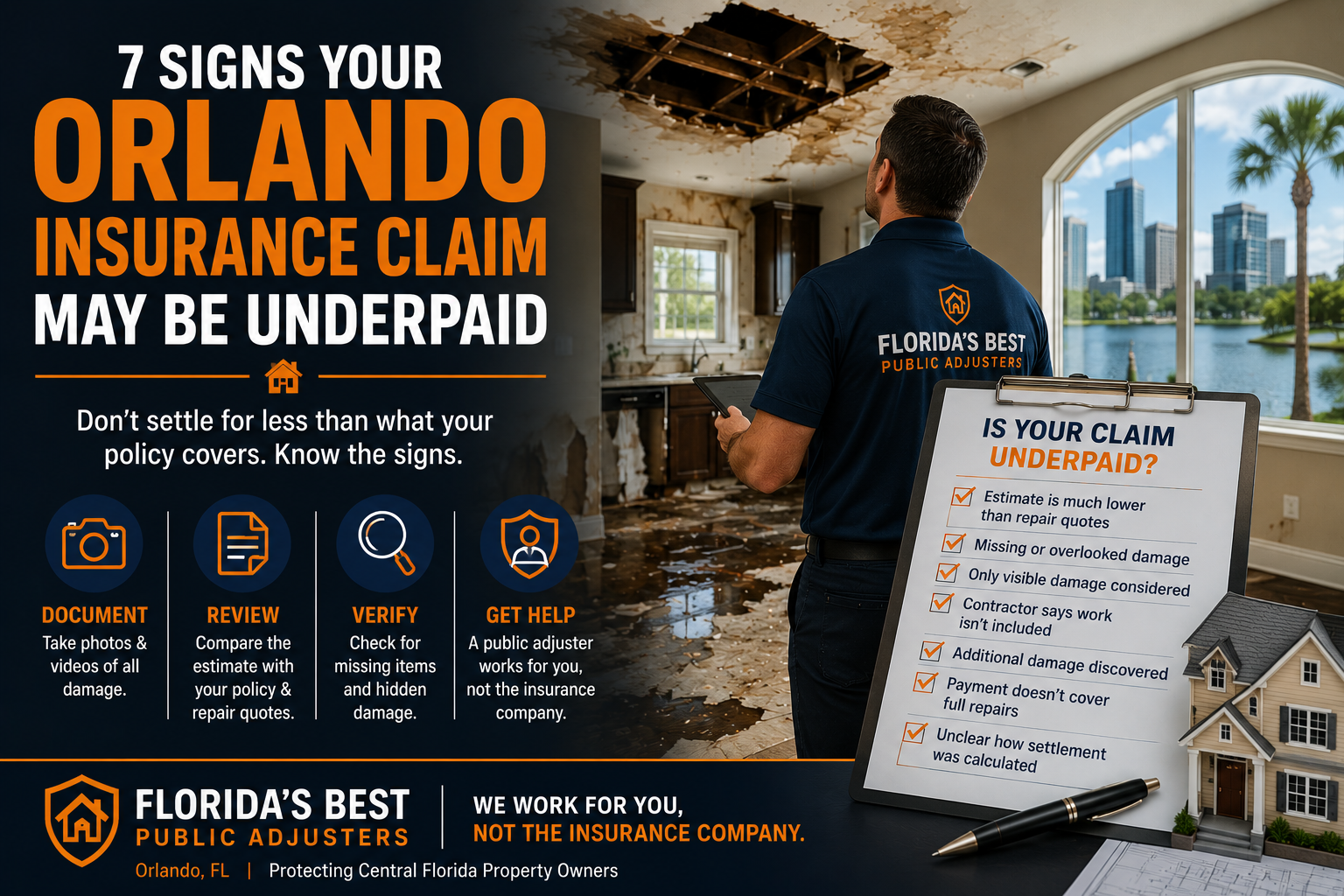
What If the Insurance Company’s Estimate Is Too Low?
Receiving an insurance estimate does not necessarily mean every part of the loss has been accounted for.
Property damage can extend beyond what is immediately visible.
For example, a water damage claim may involve drywall and paint, but it could also affect insulation, flooring, electrical components, cabinetry, baseboards, or other building materials.
If important damage is overlooked, the amount offered may not reflect the full cost of restoring the property.
This is where having your own professional evaluation can become valuable.
Can a Public Adjuster Help With a Third-Party Property Damage Claim?
Yes, depending on the circumstances of the claim.
A licensed public adjuster represents the claimant’s interests rather than the insurance company’s. In Florida, public adjusters can assist insureds and third-party claimants with qualifying claims involving loss or damage covered by an insurance contract.
At Florida’s Best Public Adjusters, our team can help evaluate the property damage, document the loss, prepare the claim, communicate with the appropriate insurance company, and negotiate the property damage portion of the claim.
A public adjuster does not determine legal liability or provide legal advice. However, when there is applicable insurance coverage for property damage, professional claim representation can help ensure the physical loss is thoroughly documented and presented.
What If You Have Your Own Property Insurance?
Having your own insurance does not automatically mean you should ignore the party that caused the damage.
Depending on the circumstances, there may be different options for pursuing the claim.
The right approach depends on the cause of loss, the policies involved, deductibles, coverage limitations, and other factors.
Before deciding how to proceed, it can be helpful to have the damage and insurance situation reviewed by an experienced professional.
Don’t Settle Before You Understand the Full Damage
One of the biggest mistakes property owners can make is accepting a settlement before understanding the complete scope of their loss.
Once a claim is resolved, recovering additional money for previously overlooked damage may become more difficult.
Before accepting an offer, make sure you understand:
- What damage is included in the estimate
- What repairs are required
- Whether hidden damage has been investigated
- Whether all affected areas are included
- What the proposed settlement actually covers
Taking the time to properly document your loss can help protect you from paying out of pocket for damage someone else caused.
Get Help With a Third-Party Property Damage Claim in Florida
If another person, contractor, business, neighbor, or property owner caused damage to your Florida property, you may have options for pursuing compensation through applicable insurance coverage.
Florida’s Best Public Adjusters helps property owners and third-party claimants navigate complicated property damage claims. We work for you, not the insurance company, and our goal is to properly document your loss and pursue the maximum settlement available for the covered property damage.
If someone else damaged your home, condo, rental property, or commercial building, contact Florida’s Best Public Adjusters for a claim review. Understanding your options before accepting an insurance settlement can make an important difference in your recovery.
Frequently Asked Questions
What is considered a third-party property damage claim?
A third-party property damage claim generally involves damage to your property caused by another person or business, with compensation being pursued through applicable insurance coverage associated with the responsible party.
Can a public adjuster represent a third-party claimant in Florida?
Florida law allows licensed public adjusters to prepare, file, negotiate, and assist with qualifying insurance claims for insureds and third-party claimants involving covered property loss or damage.
What should I do immediately after someone damages my property?
Document the damage with photographs and video, take reasonable steps to prevent additional damage, keep receipts and records, identify the parties involved, and avoid disposing of important evidence whenever possible.
Should I accept the insurance company’s first offer?
Before accepting a settlement, review whether the estimate includes the complete scope of your property damage. Hidden or overlooked damage can sometimes increase the actual cost of restoring the property.